I was struck this year by the bookends of life. In the past fifteen months, I have watched my mom’s final breaths on this earth while anxiously awaiting my son’s first. I’ve drawn up the design for a gravestone in the same month I’ve decorated a newborn nursery. I’ve begged God for Mom’s peaceful departure from this world and, using the very same language, I’ve begged Him for Luke’s peaceful entrance.
I’ve come to see that the first and final breaths of this life are not all that different. Whitney Pipkin first introduced me to the idea, citing “a cadence to the way we leave this world that echoes the rhythm with which we arrive.” She writes of the intensity, the mystery, and the way you have to relinquish your sense of control and ride out the riptides of uncertainty.
I remember the final three days of Mom’s life. It was clear she had reached the end of her earthly existence, but in God’s timing, her heart continued beating. It seemed cruel at the time. I’d storm off to my parents’ bedroom and nearly shake my fist at God: “What is taking so long? Why won’t you just take her? Why are you keeping her here suffering?”
It feels strikingly similar to the final weeks of my pregnancy, where day after day brought a despairing distance from our due date. Ten whole days had drawn beyond January 5th, and alas, there was no baby in sight. Clearly not having learned my lesson, I’d storm off to our own bedroom and pray a similar prayer: “What is taking so long? Why won’t you just bring him? Why are you keeping me suffering?”
Waiting for birth and waiting for death pries our fingers open from our own agenda and forces us to surrender to the God who has written every single one of our days. It brings a sense of awe in the sovereign Creator who determined our birthdays and death days before we were ever born. It also reminds us that we are not omniscient, but near-sighted nomads grappling with a God who gives us what we would have asked for if we knew what He knows.
These bookends of life also bring about a fierce intentionality. No obligation could have possibly pulled me away from my mom’s bedside in her final week of life. I couldn’t stop watching the rise and fall of her soft-skinned chest, the peaceful breathing of a soul just seconds away from glory. I wanted to memorize her every freckle and follicle so that her radiant beauty would never fade from my mind. When Luke was born, the same was true. I could not for a moment take my eyes off of the mesmerizing miracle asleep on my chest. I watched his little baby belly rise and fall, desperate not to miss a single breath, a single blink. The distractions of life seem utterly meaningless when compared to first and final breaths.
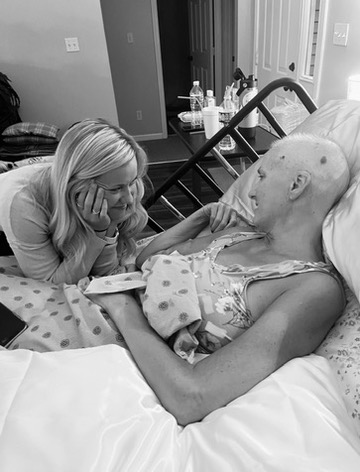
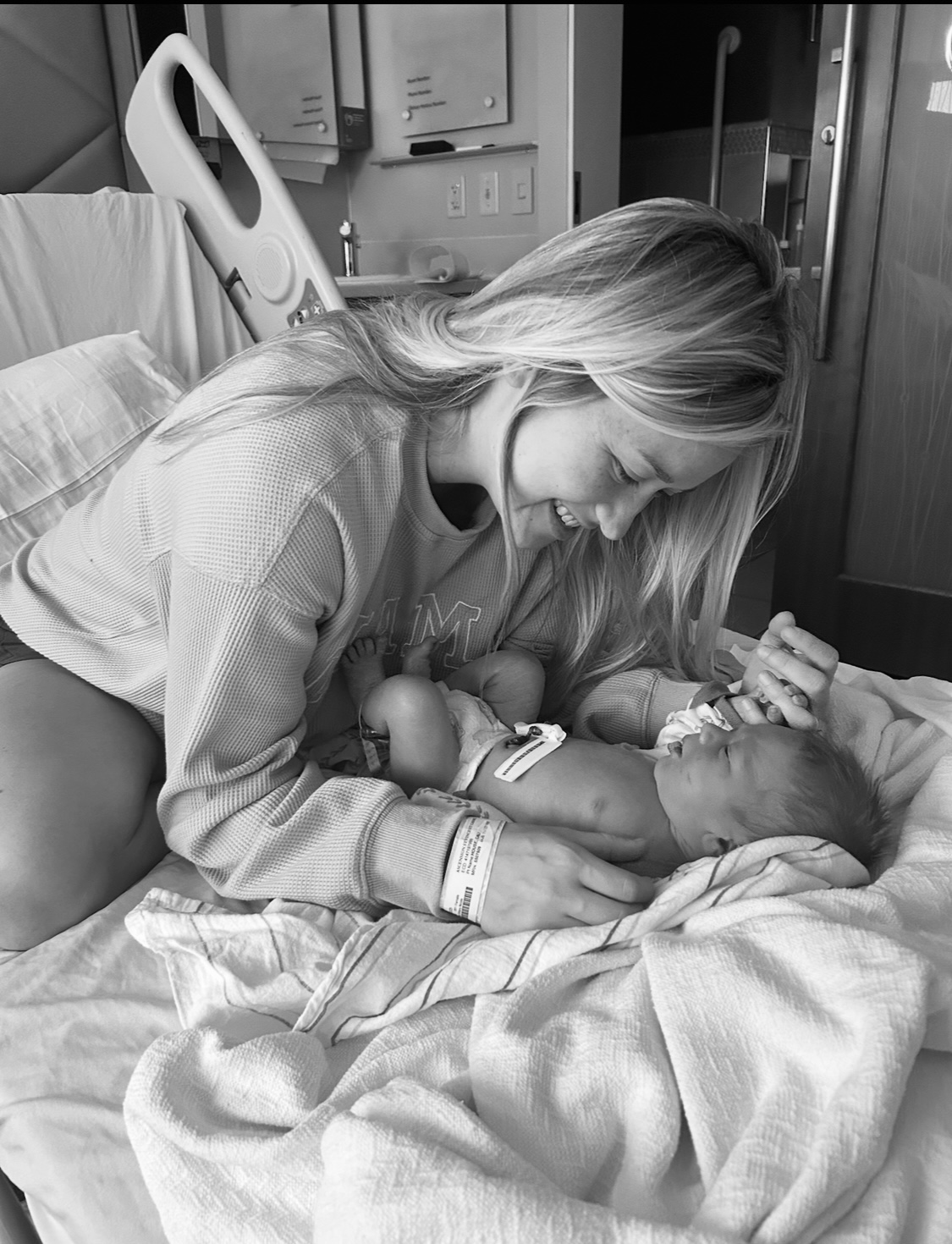
And I could probably name a hundred striking similarities that come with bearing witness to the beginning and end of life. There’s the groaning, the planning, the rally-day energy surge that brings with it an urge to get things done. But without a doubt, the most captivating comparison is that in both bookends of life, we get to use the word, “delivered.”
A baby is brought from womb to world, oftentimes with great pain, agony, and suffering. That was certainly true of my labor with Luke, especially after a 36-hour labor, a massive hemorrhage, and that pesky pre-teen spinal fusion which deemed me “not a candidate” for an epidural. But once he was delivered, there was abundant rejoicing — so much so that we could seldom remember the suffering.
In the same way, Pipkin writes, “for those who trust in Christ, even death becomes a delivery room.” Mom’s final moments of life were marked by pain and paralysis caused by a rapidly-spreading cancer. But the moment she took her final breath, she too was delivered. Christ’s work on the cross confirmed that her days of sin and suffering were finally and forever finished, and she got to enter into a place of abundant rejoicing — so much so that even we, her children, could hardly see the suffering she endured. All we could think about was the glory — the deliverance — that she was tasting in full.
Both of these bookends point us to a Creator who has not-for-a-moment forsaken us, beginning before our birth and enduring throughout all eternity. May both life and death bring with it an awe of our faithful Father who delights in deliverance — from life’s first cry to final breath. Amen!
__________________________________________________________________________
[Credit: I cannot say enough good things about Whitney Pipkin's We Shall All Be Changed: How Facing Death with Loved Ones Transforms Us. To this day, I have not read a more beautiful (and relatable!) testimony on the transformative nature of death for all its witnesses. I owe many of these ideas to her and I recommend the book to everyone facing the loss of a loved one.]
 House on the Rock
Leave a comment